
How Much Room Does a Backyard Pickleball Court Need?
Planning a backyard pickleball court? The lines are a fixed size; the room around them is the real decision. Two East Valley courts show how it fits.
Western Skies Landscaping ·
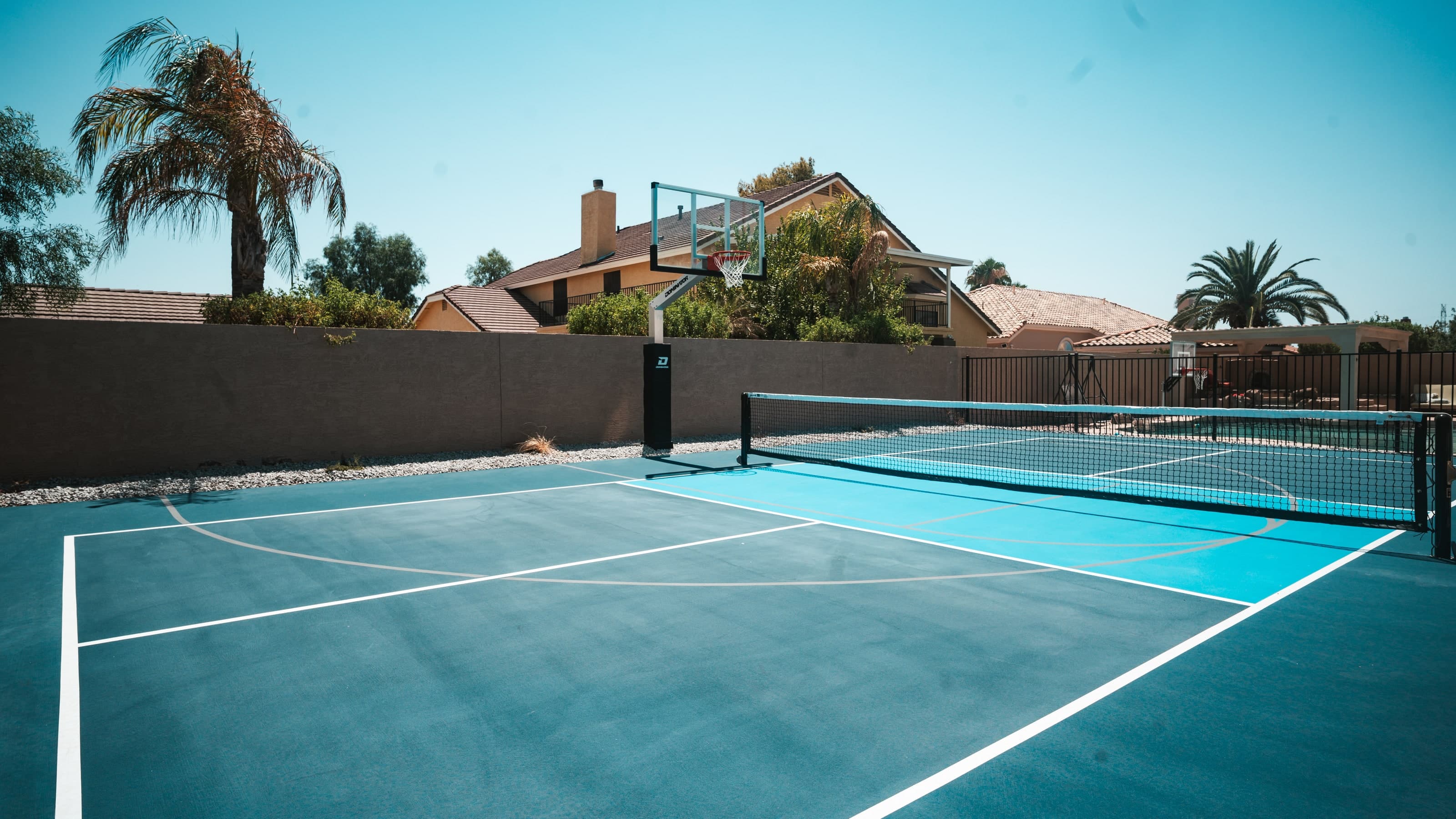
The first question most people ask about a backyard pickleball court is whether it will fit. The court itself is the easy part, because the lines are always the same size. The real decision is the room around them, and what else the yard has to hold.
Two courts we built in the East Valley show two different answers: a dedicated court set down into an Arcadia backyard, and one sport court in Mesa that handles pickleball and basketball.
The court is a fixed size
A regulation pickleball court is 20 feet wide by 44 feet long, for singles and doubles. Each side has a 7-foot non-volley zone (the kitchen), and the net is 36 inches high at the sidelines and 34 inches at the center. Those figures come from USA Pickleball, the sport’s governing body in the U.S.
Plan for the space around the lines
Players don’t stop at the lines. They chase lobs behind the baseline and wide balls past the sidelines, so the surface has to run past the court on every side. USA Pickleball’s rulebook sets a minimum playing surface of 30 by 60 feet, and recommends 34 by 64 feet for new construction.
So when you measure your yard, measure for the whole playing surface, then add the walkways, steps and seating you’ll want around it.
A dedicated court or a shared surface
The next decision is what the court is for.
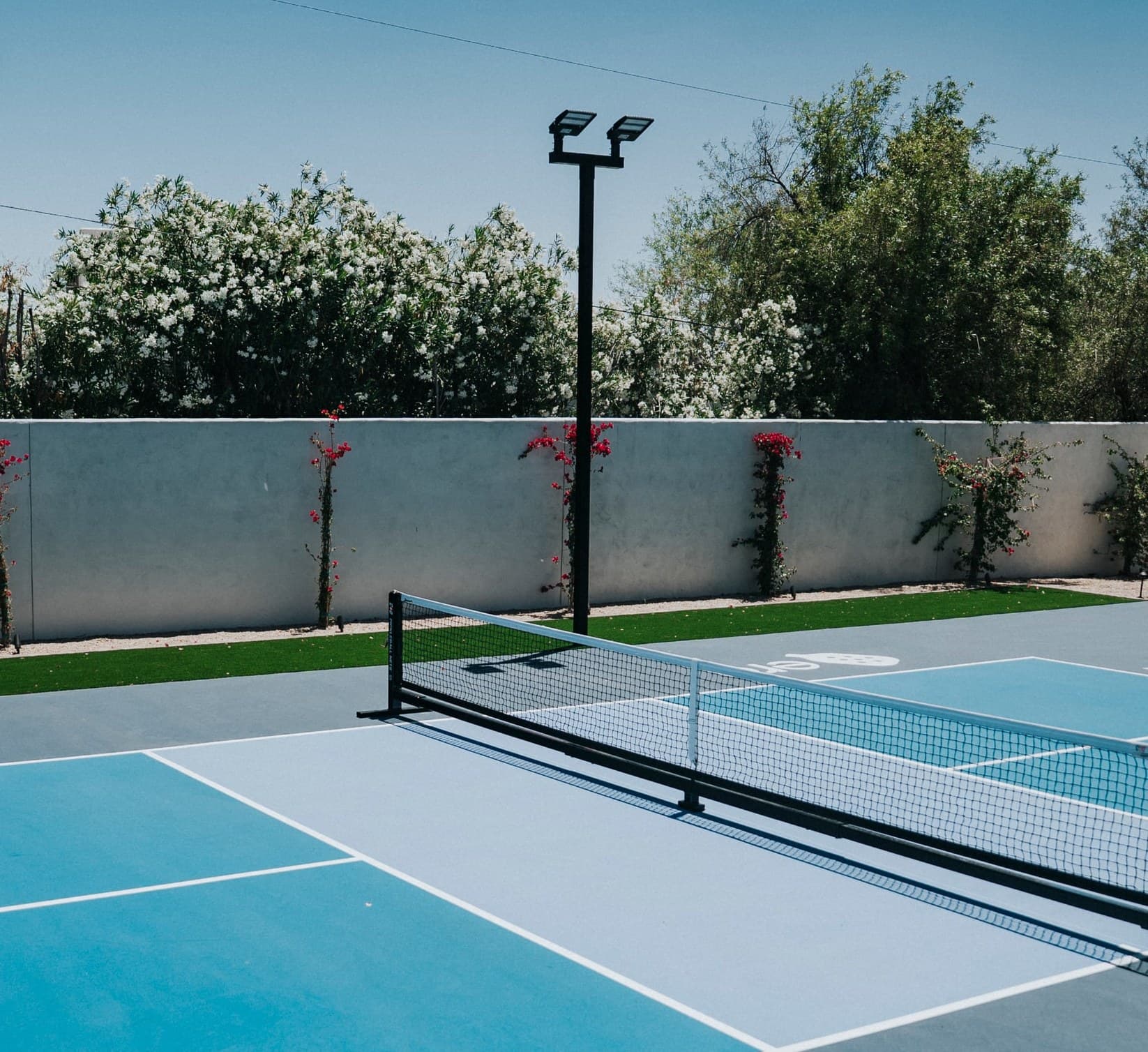
- A dedicated court. The Arcadia court was designed for competitive family use, so it’s a pickleball court and nothing else, with custom court graphics.
- One surface, more than one game. The Mesa court is striped for pickleball and has a basketball hoop at the end, so the same slab works for different ages and different days.
A dedicated court plays best if pickleball is the main event. A shared surface makes sense when the family plays more than one game and the yard can only hold one court.
Fit the court to the yard, not the other way around
A court takes up a big, flat piece of the yard, so where it sits shapes everything else.
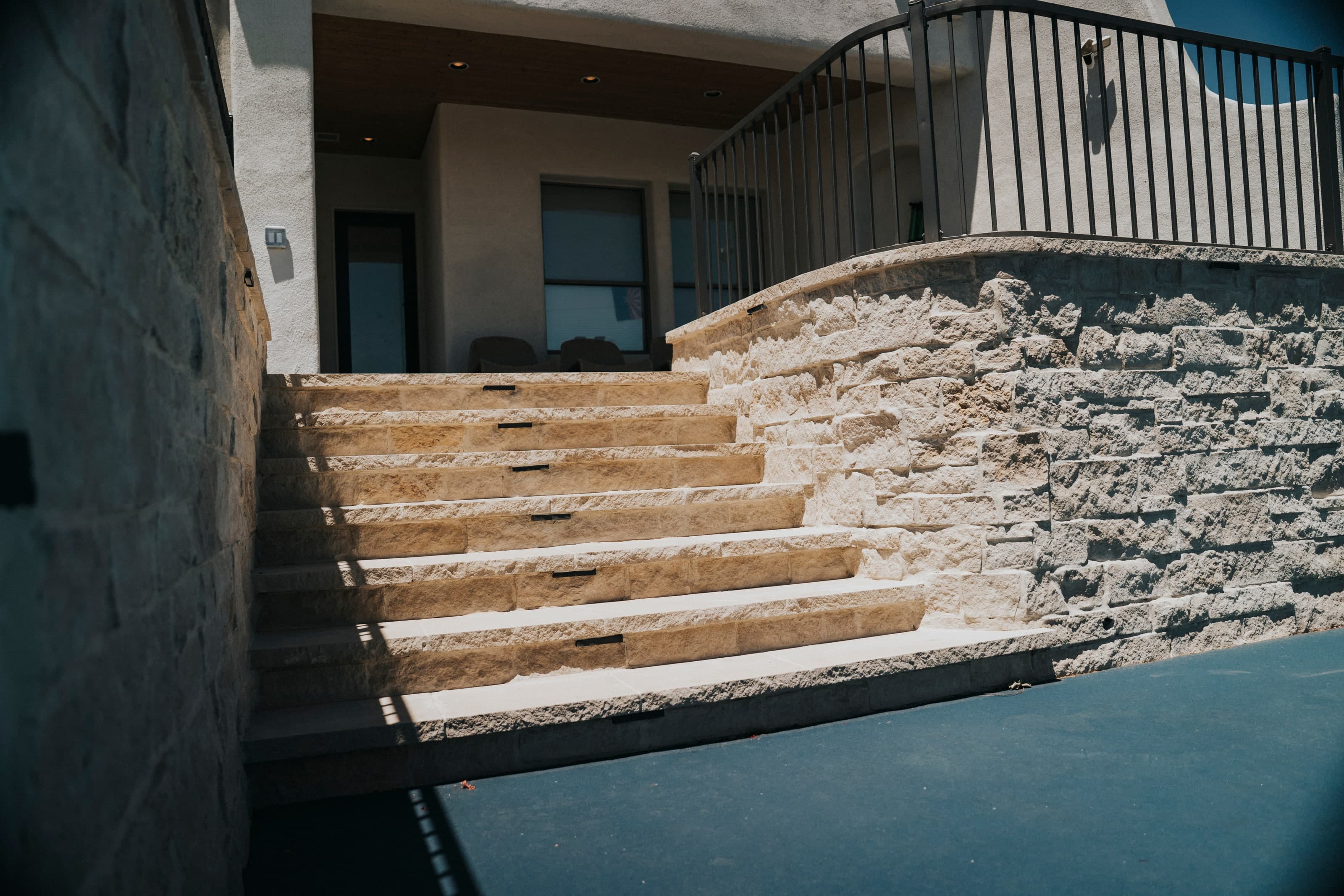
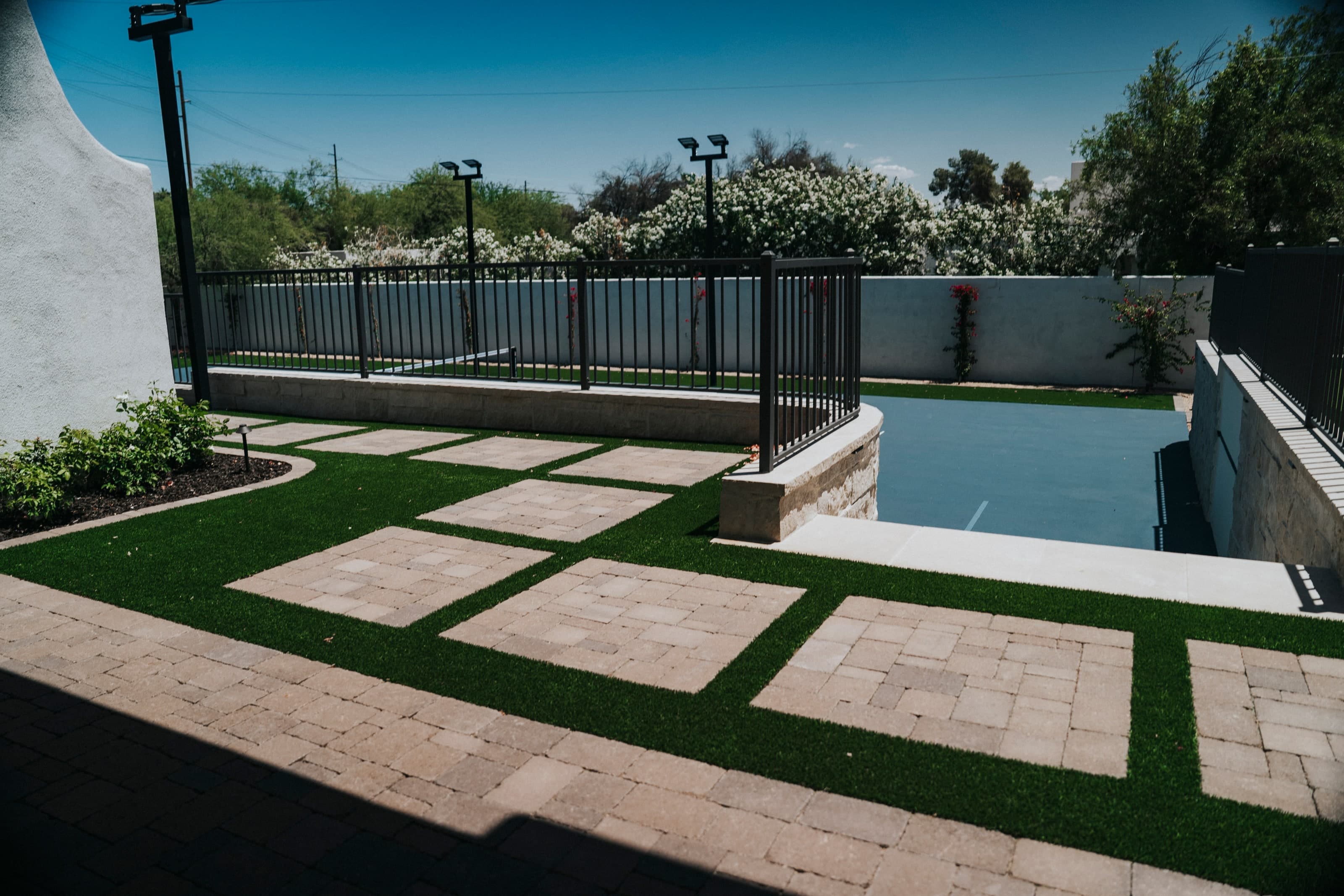
In the Arcadia yard, we excavated the site to set the court down into the yard. We built the stacked-stone retaining wall and stone steps down from the house to the court, and paver stepping stones that lead across the turf to it from the other side. We also coordinated court lights, so the family can play after dark. The court and a putting green share the backyard with the home’s pool and spa area.
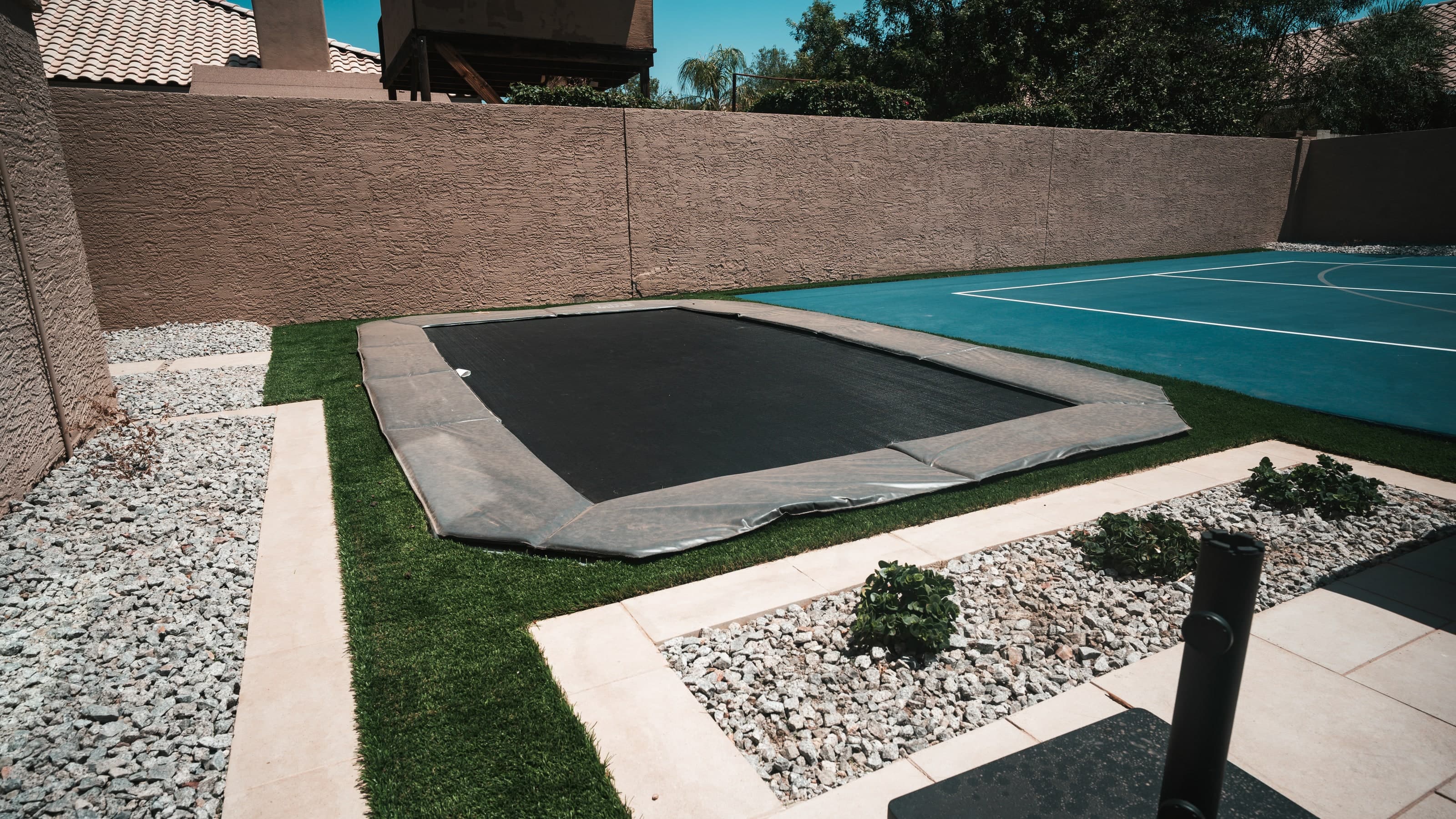
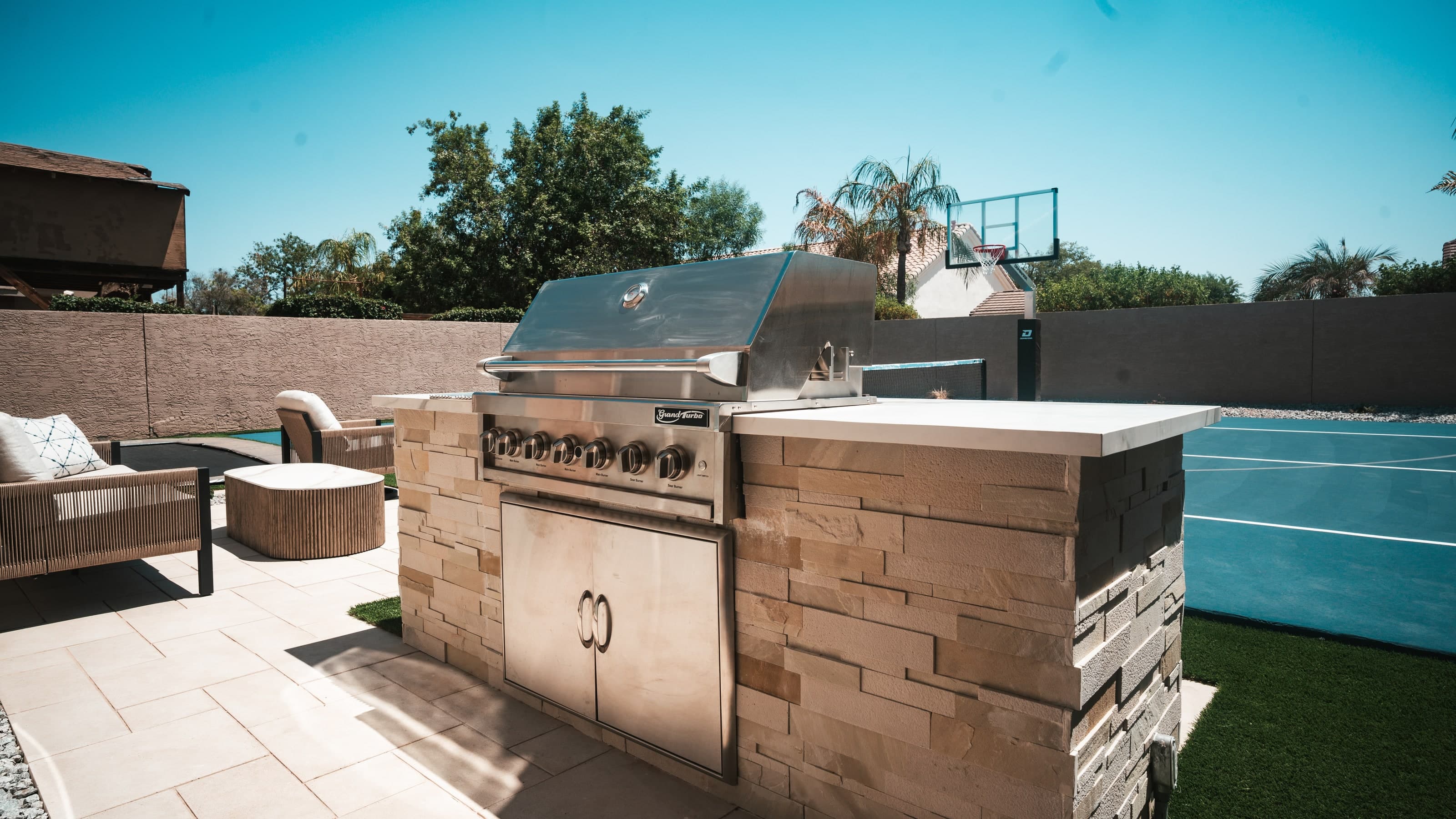
In Mesa, the court shares the yard with a sunken trampoline, a built-in BBQ island and a patio. Games, cooking and lounging all happen side by side.
What else to settle early
- Orientation. USA Pickleball recommends running outdoor courts north–south, so nobody is looking straight into the morning or late-afternoon sun. In Arizona, that matters for most of the year.
- Evening play. If the court will be used after dark, plan the lighting with the court, not after it.
- Ball containment. Decide where a fence or wall stops stray balls, especially near a pool, a patio or a neighbor’s yard.
- Grading and drainage. A court is a big hard surface. Where its water goes has to be part of the plan from the start.
- Getting there. Paths and steps from the house decide whether the court feels like part of the yard or a separate zone.
Planning your own
Start with who will play and how often, measure for the full playing surface, then fit the court into the rest of the yard. See the full Arcadia backyard pickleball court and the Mesa sport court and outdoor-living backyard, or read how we plan backyard pickleball and sport courts. For fitting several activities into one yard, see our note on fitting a pool, lawn and putting green into one backyard. More finished yards are on our projects page.